
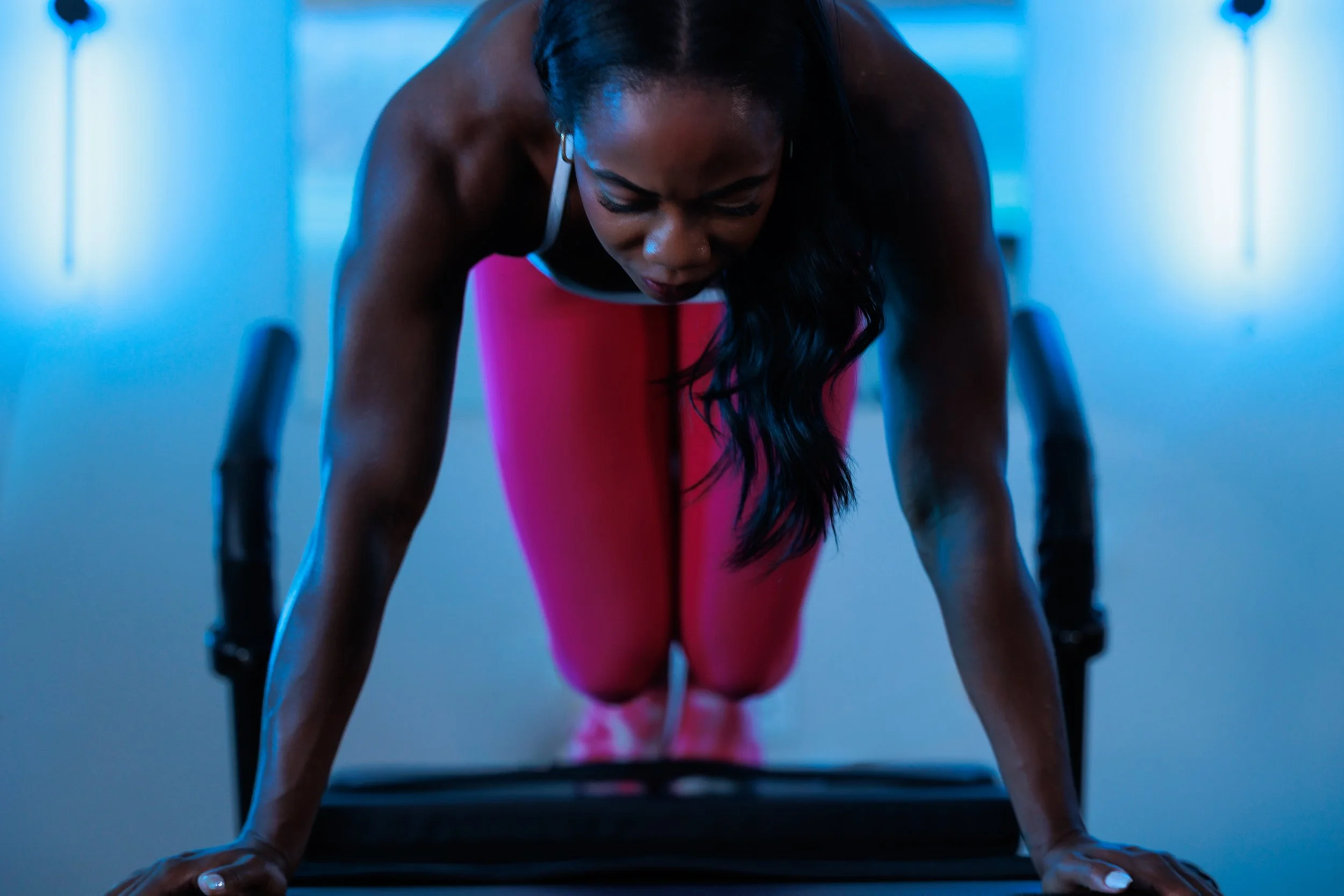
Performance In Motion
Your sport demands rotation, control, and stabilizers that hold up under real play. Our classes enhance these through precise full-body movement — the kind that makes your stance feel more reliable and your swing feel cleaner. It’s not about learning new moves. It’s about making the movement you already use feel stronger, steadier, and more connected.
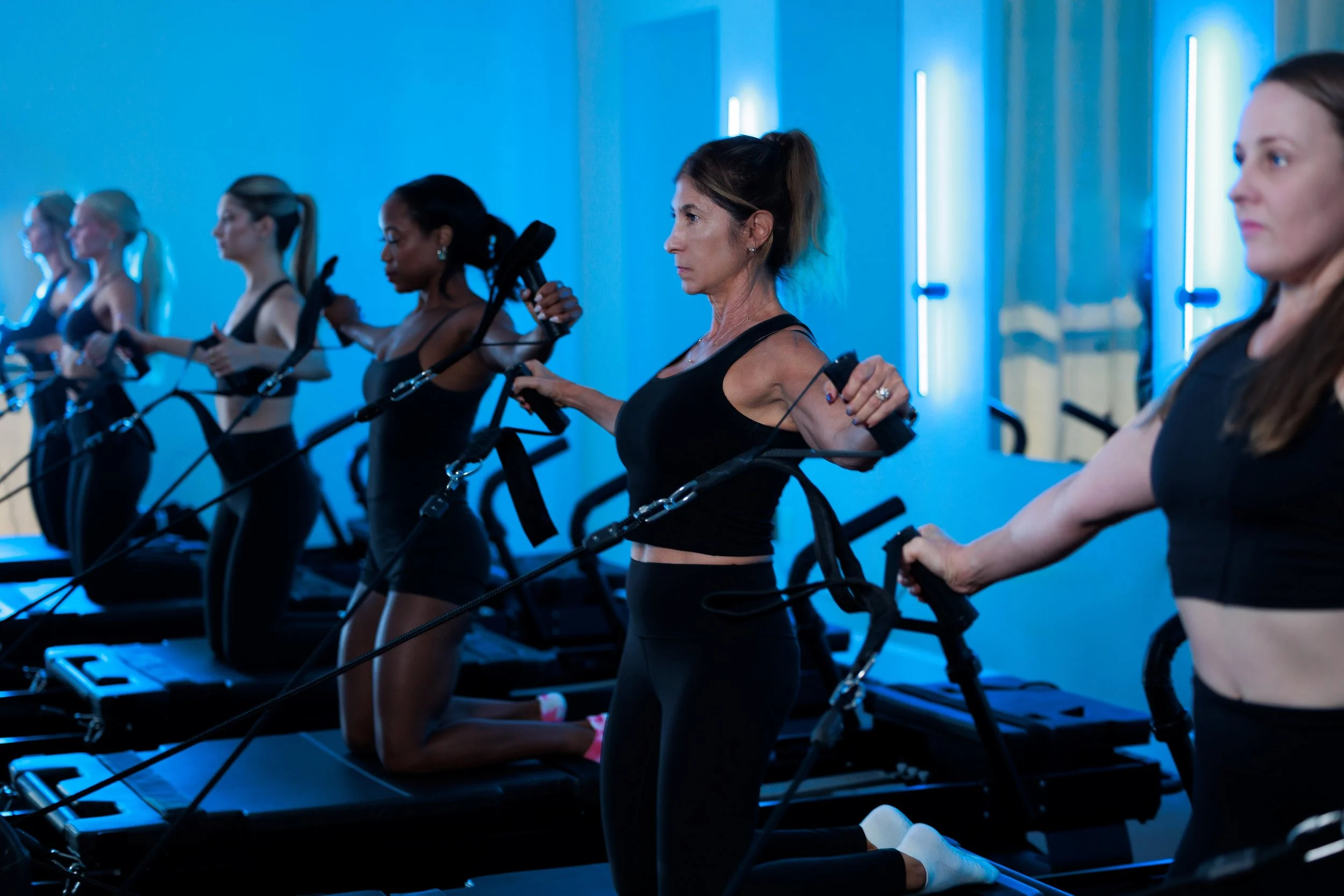
Twisting, hitting, swinging and landing: your movements require control, rotation, and force transfer. We’re building the deep core, hip, and shoulder stability that adds that extra edge to your game.
If you’re into golf, tennis, pickleball, hiking, softball/baseball, volleyball, martial arts, swimming, cycling, weight training, functional fitness, or any activity requiring balance, rotation, or joint stability, this method is for you.
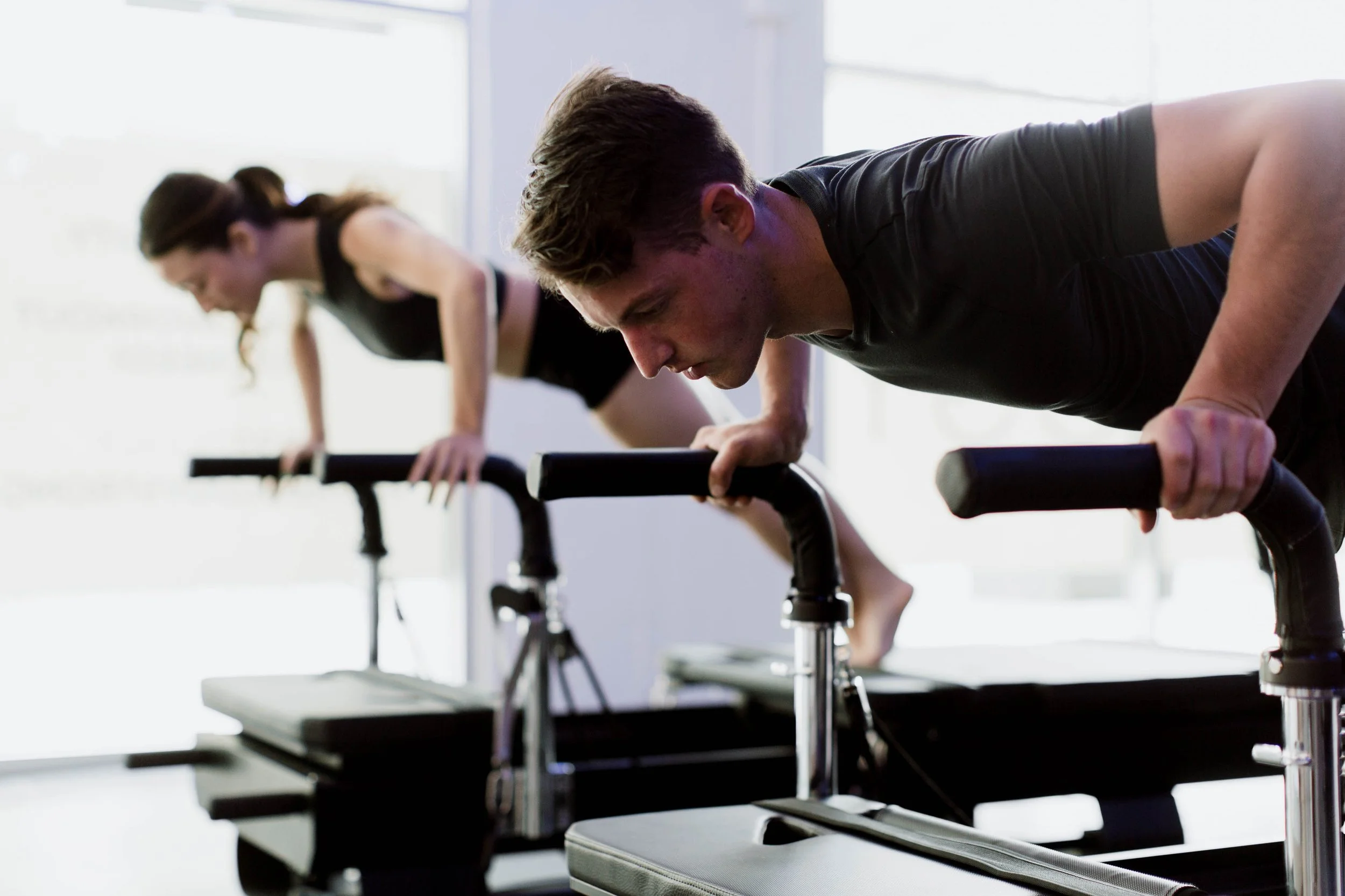
Why Power and Stability Matter
Clean rotation and steady positions come from stabilizers doing their job — not from bigger muscles working harder.
Most adult athletes have:
strong prime movers
stabilizers that don’t always keep up
rotation that feels different from side to side
positions that feel steady one day and shaky the next
endurance that fades faster than expected
This is why movement feels inconsistent — and why certain positions break down under real play.
Your sport builds skill. Your gym builds strength. We build the control that holds everything together.
The Power & Stability Self‑Test
A quick five‑step check you can do at home. Each one shows how steady your movement feels in real‑world positions.
Score each test 0–2
Rotational Hip Control — Stand on one leg holding a light object. Rotate your torso 45° left and right while keeping your pelvis level. 0: hip drops, foot grips, rotation collapses 1: rotation possible but unstable 2: clean rotation, steady hip, no compensation
Rotational Core Control — Hold an object in one hand and extend that arm forward. Hold 10 seconds without letting your torso rotate toward the load. 0: torso rotates or shifts 1: can hold but inconsistent 2: steady, no rotation, no sway
Rotational Shoulder Control — Raise one arm overhead, pause, then rotate your torso 30° without letting the shoulder shift or shrug. 0: shoulder pops forward, shrugs, or shakes 1: can perform but unstable 2: smooth raise, stable shoulder, clean rotation
Long‑Lever Stability — Reach one arm forward as far as possible without bending or twisting. 0: collapsing or twisting 1: reach possible but shaky 2: long reach, steady torso
Rotational Endurance — Sit against a wall with thighs parallel. Extend one arm forward and rotate your torso 20° away from it. Hold 20–30 seconds. 0: cannot hold position 1: can hold but shaking or collapsing 2: steady, controlled, rotation stays clean
Interpretation
8–10: You have solid control and steady movement. You’ll still benefit from precision‑based training, but you’re starting from a strong base.
5–7: You have one or two areas where your movement feels less steady. This is the most common range for adult athletes.
0–4: Your stabilizers aren’t supporting your movement as well as they could. Many athletes feel strong in their sport but shaky in these tests, which illuminates why certain positions feel inconsistent.
Why This Test Works
Your sport hides the places where your movement gets shaky.
Golf hides shoulder control. Tennis hides core rotation. Pickleball hides hip control. Hiking hides endurance control. Softball hides reach control.
Practicing your sport makes you good at your sport. It doesn’t build the stabilizers that keep your movement steady. We do.
What To Do Next
If your score is 7 or below, you’ll benefit from trying a few of our classes — you’ll feel the difference quickly. If your score is 4 or below, you can expect your movement to feel noticeably steadier within your first few sessions. If your score is 0–2, this is exactly the kind of training that makes your movement feel more reliable under real‑world load.
Ready for steadier, more precise movement? Start with our New Member Special — three sessions designed to build the stabilizer control your sport calls for.